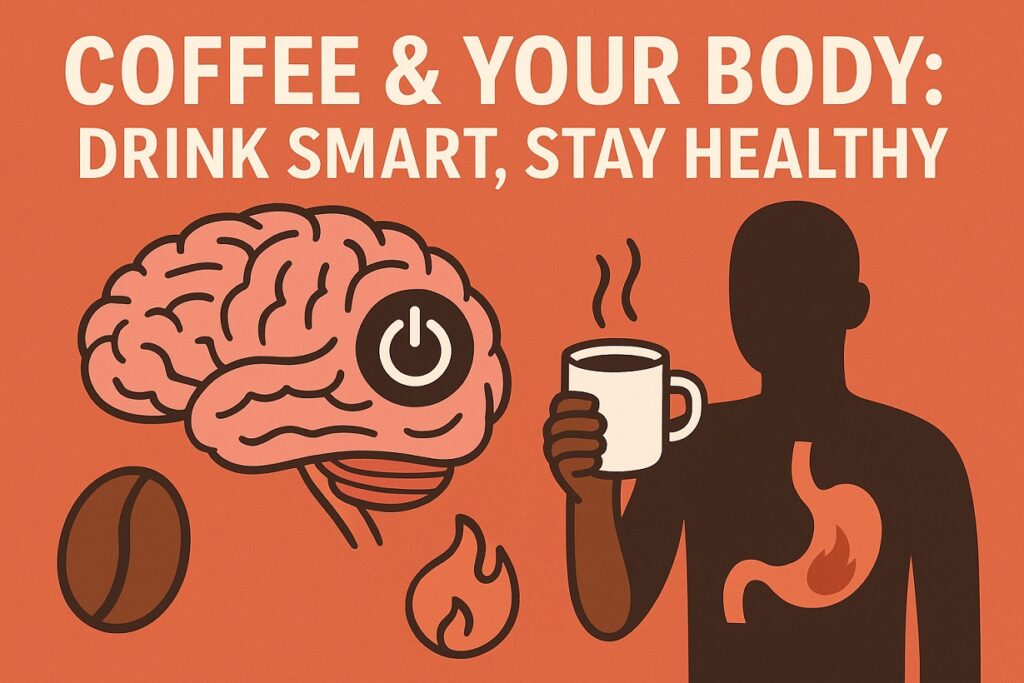
Coffee has long been our daily wake-up ritual — a small cup of motivation that promises focus, creativity, and calm. But beneath that familiar aroma, coffee’s chemistry is doing far more than just keeping us alert.
The Brain: When Caffeine Blocks the “Tired Switch”
Caffeine doesn’t give you energy — it simply hides your fatigue. Inside the brain lives a molecule called adenosine, which tells your body it’s time to rest. Caffeine blocks adenosine receptors, tricking your neurons into staying active.
It’s like forcing your brain to keep spinning when it wants to slow down.
Research from Harvard University shows that consuming more than 600 mg of caffeine per day — roughly six cups of regular coffee — can raise cortisol (the stress hormone) by up to 40%( as if the tension you feel when having consecutive 3-hour meetings one day), leading to anxiety, jitteriness, and irregular heartbeat. Prolonged stimulation can also disrupt the vagus nerve, which controls digestion, leading to stomach cramps or sudden diarrhoea.
The Stomach: When Acids Burn the Lining
Strong coffee doesn’t just wake you up — it wakes your stomach too.
Besides caffeine, coffee contains chlorogenic acid, a compound that triggers your stomach cells to produce extra acid. Japanese researchers found that drinking black coffee on an empty stomach increases the risk of mucosal injury by 2.3 times compared with drinking it after a meal. Over time, this “caffeine → acid surge → lining damage” cycle can lead to heartburn, pain, and even black stool — an early sign of internal bleeding.
The Valve Problem: Why Reflux Happens
Between your stomach and oesophagus lies a delicate muscle called the lower oesophageal sphincter. It’s meant to stay tightly closed — except when swallowing. But caffeine relaxes this muscle, reducing its pressure by nearly 50%. That’s why people who drink three or more cups of coffee daily are almost five times more likely to suffer acid reflux, according to the European Gastroenterology Association.
When acid creeps upward, it burns the esophagus. Over time, this irritation can evolve into Barrett’s esophagus, a known precancerous condition that deserves medical attention.
Smarter Coffee Habits: How to Drink Without Damage
1. Know your caffeine limit
Each person metabolizes caffeine differently — fast or slow — depending on the CYP1A2 gene. A fast metabolizer can process 400 mg (around 4 cups) in six hours; a slow one may need twenty hours. If you’re new to coffee, start with 50 mg (a small espresso) and see if your heart rate or hands tremble. Pregnant women, hypertensive, or anxious individuals should choose low-caffeine blends.
2. Choose the right time
Morning cortisol peaks naturally between 7–9 a.m., so drinking coffee then may reduce its effect. The best times are after 10 a.m. or 1:30–3 p.m., when your energy naturally dips. Avoid caffeine after 5 p.m. — studies show 68% of people lose sleep when they drink it late. Athletes can take it one hour before training for endurance, but hydration is essential — pair it with water or electrolyte drinks.
3. Pair it right
Drink coffee with calcium-rich foods such as milk or yoghurt — they help neutralise acid and replace calcium lost due to caffeine. Want a healthier twist? Try a golden latte — a latte with cinnamon and turmeric — both natural anti-inflammatories that soothe your stomach. In the afternoon, swap coffee for hibiscus tea; it’s rich in anthocyanins that help repair esophageal tissue.
Gentle Alternatives: Renew Energy Without the Jitters
If you want to cut down gradually, use the “step-down” method:
Week 1: Replace half your coffee with decaf.
Week 2: Mix in roasted barley tea.
Week 3: Switch fully to caffeine-free drinks.
Refreshing options include mint lemon water (cool and awakening), cold-brewed oolong (rich aroma, no caffeine), and coconut water (natural electrolytes). A Japanese favorite, hojicha — roasted green tea — contains almost zero caffeine but three times the antioxidants of regular green tea, with a comforting toasty flavour.
Final Thought
Coffee isn’t the enemy. It’s a powerful tool — one that sharpens the mind when used wisely, or exhausts it when abused. Know your body, respect your limits, and you’ll find a way to enjoy that cup without paying the hidden price.
Shared by Haichuan Gift Team